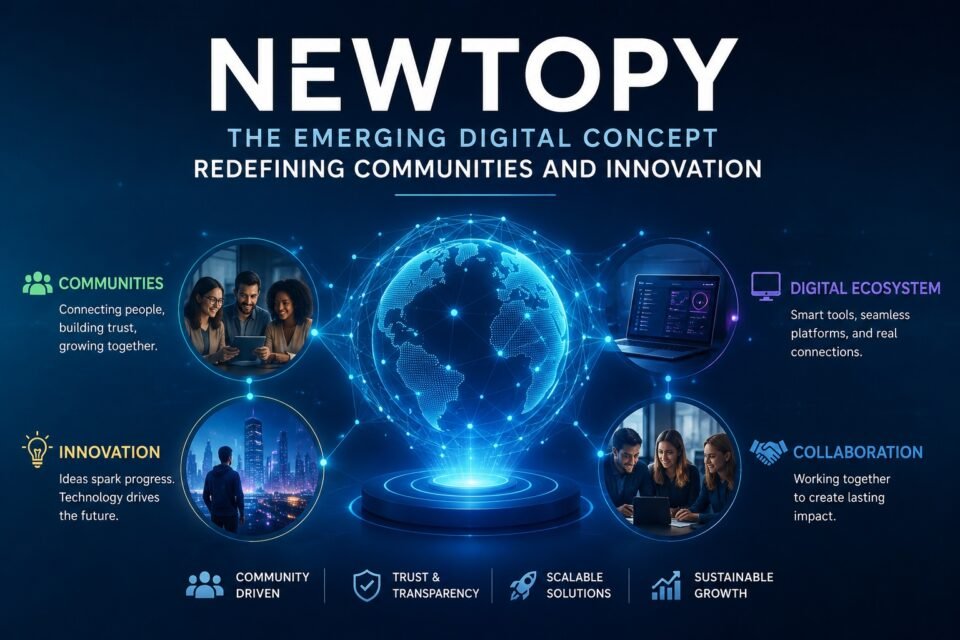

In the rapidly evolving landscape of digital technology, new terms and concepts emerge almost daily, each promising to reshape how we interact, create, and build communities online. One such term that has been gaining significant traction is newtopy. While it may not yet appear in traditional dictionaries, newtopy has captured the imagination of innovators, creators, and digital thinkers who see it as a symbol of a better, more intelligent digital future. This article explores the multifaceted world of newtopy, from its linguistic roots to its practical applications, and examines why this emerging concept matters in today’s increasingly digital world.
What Is Newtopy? Understanding the Core Concept
At its most fundamental level, newtopy is a coined term that combines two powerful concepts: “new” and “utopia” (or the Greek word “topos,” meaning place or space). Together, these elements suggest a new kind of ideal space—a fresh, innovative digital environment where creativity thrives, communities flourish, and technology serves human needs rather than complicating them.
Newtopy does not have a single fixed meaning. Instead, it functions as a flexible conceptual framework that can represent different things depending on context. For some, newtopy is a next-generation digital platform designed to empower decentralized, smart communities. For others, it is a mindset centered on innovation, reinvention, and breaking away from outdated systems. Some interpret newtopy as a creative ecosystem where artists, designers, and creators share ideas and collaborate, while others see it as a lifestyle movement focused on embracing fresh possibilities.
The Linguistic Roots of Newtopy
The word newtopy is a modern invention—a neologism born from the digital age. Its construction is intentionally evocative:
New → representing innovation, discovery, and fresh ideas
Utopia/Topos → meaning an ideal place, world, or space
Together, these components create a meaning like “a new and improved ideal system or space”. The term’s flexibility allows it to adapt across different industries and applications, making it both versatile and powerful.
The Core Principles That Define Newtopy
While newtopy may be interpreted in various ways, most discussions of the concept share a set of core principles that define what it represents. These principles are practical rather than ideological, designed to address the shortcomings of earlier digital community models.
1. Human-Centered Design
At the heart of newtopy is the belief that technology should enhance human life rather than complicate it. Systems built on newtopy principles are designed around real human needs, not just engagement metrics or profit margins. This means creating digital spaces that are intuitive, accessible, and genuinely useful.
2. Transparent Governance
Newtopy emphasizes clear, visible rules and decision-making processes. Unlike traditional platforms where users have little say in how the system evolves, newtopy supports democratic participation and accountability. Community members have real input through voting systems, proposal submissions, and rule-setting mechanisms.
3. Shared Ownership and Community Control
In a newtopy environment, participants are not just users—they are stakeholders. They have a tangible stake in the growth and outcomes of the community. This means users own their data and identity without relying on corporate intermediaries.
4. Adaptive and Flexible Infrastructure
Newtopy supports systems that evolve alongside the community rather than dictating behavior. The infrastructure is modular and interoperable, allowing communities to plug and play services based on their specific needs.
Key Features of Newtopy Platforms
When newtopy manifests as a digital platform or ecosystem, it typically includes several distinctive features that set it apart from traditional online spaces.
AI-Powered Intelligence
Newtopy platforms leverage artificial intelligence to create smarter, more responsive digital environments. This includes AI-driven moderation that detects spam, hate speech, and low-quality interactions, as well as smart content recommendation systems that personalize user experiences.
Decentralized Identity and Governance
User identities in newtopy systems are often stored on blockchains, providing secure, tamper-proof digital passports. Governance is managed via smart contracts that handle voting, access rights, and reputation management. This ensures transparency and gives users genuine control over their digital presence.
Contextual and Quality-Based Ranking
Unlike traditional platforms that rank content primarily by popularity, newtopy emphasizes relevance, accuracy, and originality. Posts and comments are evaluated based on their actual value to the community, encouraging thoughtful, meaningful contributions rather than clickbait or low-effort content.
Evidence-Based Discussions
One of newtopy’s most innovative features is the concept of “evidenced discussion chains”—systems that reward users for backing up their opinions with credible evidence. This approach discourages baseless arguments and promotes fact-based, civil discourse.
Topic-Centric and Self-Governing Spaces
Newtopy platforms allow users to build or join self-governing topic rooms, where standards and culture are community-defined. This helps maintain focused, respectful environments within each topic area.
Why Newtopy Is Gaining Popularity
Newtopy is growing in popularity for several compelling reasons. Understanding these drivers helps explain why the concept resonates with so many people across different fields.
1. Digital Fatigue and Information Overload
People are increasingly tired of digital overload. Traditional social media platforms often feel cluttered, chaotic, and overwhelming. Newtopy offers a counter-movement toward simplicity and purpose—digital spaces that are clean, focused, and genuinely useful.
2. Demand for Privacy and Control
Users are demanding more control over their data and online experiences. Newtopy platforms emphasize data transparency and user agency, allowing individuals to manage what they share, who sees it, and how their information is used.
3. Need for Meaningful Connections
There is a growing desire for meaningful interaction rather than passive consumption. Newtopy focuses on quality engagement—comments, discussions, and collaborations that actually matter.
4. Modern, Forward-Thinking Appeal
The term newtopy itself feels modern and futuristic. Its clean, memorable sound evokes imagery of visionary projects and ideal spaces. This makes it attractive to startups, creators, and innovators looking to position themselves at the cutting edge.
5. Alignment With Current Digital Movements
From decentralized communities to creator-first ecosystems, today’s internet increasingly values new and inclusive digital spaces. Newtopy fits perfectly into these trends, offering a framework that supports innovation, collaboration, and community ownership.
Newtopy vs. Traditional Social Media
To understand the value of newtopy, it helps to compare it with traditional social media platforms. The differences are significant:
| Feature | Newtopy | Traditional Social Media |
|---|---|---|
| Focus | Meaningful interaction | High engagement and attention |
| Content | Quality-based curation | Quantity and virality-driven |
| Privacy | User control and transparency | Limited control, opaque data practices |
| Community | Interest-based, niche-focused | Broad, often impersonal audiences |
| Experience | Clean, organized, purposeful | Often cluttered and distracting |
This comparison shows that newtopy aims to fix common problems found in traditional platforms—digital clutter, lack of user agency, and shallow engagement.
How Newtopy Works in Digital Life
Newtopy has practical applications across different levels of digital interaction.
For Individuals
Newtopy helps individuals build personal identity, improve online communication, and support learning and growth. It provides a space where people can express themselves authentically and connect with others who share their interests.
For Teams and Organizations
Newtopy enables better teamwork through clear communication, organized workflows, and focused collaboration. Teams can work together more efficiently without the noise and distraction common on traditional platforms.
For Communities
Newtopy supports focused discussions, meaningful interaction, and reduced digital noise. Community members can engage in productive conversations without being overwhelmed by irrelevant content or toxic behavior.
The Benefits of Embracing Newtopy
Adopting newtopy principles offers numerous advantages in today’s fast, digital world.
More Meaningful Communication: Conversations are deeper and more productive
Reduced Digital Clutter: Less noise means better focus
Improved Collaboration: Teams work together more effectively
Better User Experience: Platforms are intuitive and user-friendly
Stronger Sense of Community: Members feel valued and connected
These benefits make newtopy valuable for both individuals and businesses seeking to navigate the digital age with greater clarity and purpose.
Newtopy and Emerging Technologies
Newtopy often intersects with cutting-edge technologies such as artificial intelligence, machine learning, and decentralized platforms. These technologies enable smarter, more adaptive digital environments that can respond to user needs in real time.
Blockchain Integration
Newtopy platforms frequently incorporate blockchain technology for identity management, governance, and secure transactions. This ensures that users have genuine ownership of their digital assets and identities.
Machine Learning and AI
Artificial intelligence powers many newtopy features, from smart moderation to personalized content recommendations. Machine learning algorithms analyze community interactions (with consent) to provide insights, encourage engagement, and prevent toxicity.
Interoperability
Newtopy is designed to work with various blockchain and Web2 platforms out of the box. This interoperability means communities can integrate third-party services or even port their existing tools.
Applications of Newtopy in Real-World Scenarios
Newtopy is not restricted to just one niche. Its flexible framework allows it to power various types of communities and applications.
Education Platforms
Teachers and students can collaborate in knowledge rooms, ask structured questions, and build collective understanding. Newtopy supports branching discussions that allow complex topics to evolve without getting lost in tangents.
Professional Knowledge Sharing
Organizations can use newtopy to create professional knowledge-sharing hubs where experts contribute insights, ask questions, and build on each other’s work.
Creative Communities
Artists, designers, and creators can use newtopy platforms to share work, provide feedback, and collaborate on projects.
Civic Engagement and Policy Development
Newtopy frameworks can support structured dialogue and evidence-based discussion in policy development and civic engagement.
Getting Started with Newtopy
For those interested in exploring newtopy as a platform or concept, the process is straightforward.
Create an Account: Sign up using email or social logins, then set preferences for topics you care about
Explore Categories: Browse topics ranging from technology to entertainment, finance to DIY
Engage and Contribute: Comment on posts, upvote useful content, share articles, or start your own blog using creator tools
Conclusion: The Future of Newtopy
Newtopy represents more than just a new word or platform—it embodies a vision for a better digital future. In a world where technology often feels overwhelming and disconnected from human needs, newtopy offers a refreshing alternative: digital spaces that are intelligent, inclusive, and genuinely useful.
Whether interpreted as a platform, a mindset, or a movement, newtopy shares a common goal: making technology serve people, not the other way around. It prioritizes meaningful participation over passive consumption, community ownership over corporate control, and quality over quantity.
As digital communities continue to evolve and user expectations rise, newtopy provides a compelling framework for building the next generation of online spaces. Its focus on human-centered design, transparent governance, and shared ownership addresses the shortcomings of traditional platforms while opening new possibilities for innovation and collaboration.
For individuals, creators, and organizations looking to strengthen online interaction and build meaningful digital communities, newtopy offers a powerful and forward-looking solution. As the concept continues to evolve and gain traction, it has the potential to influence how we think about, design, and experience digital spaces for years to come.