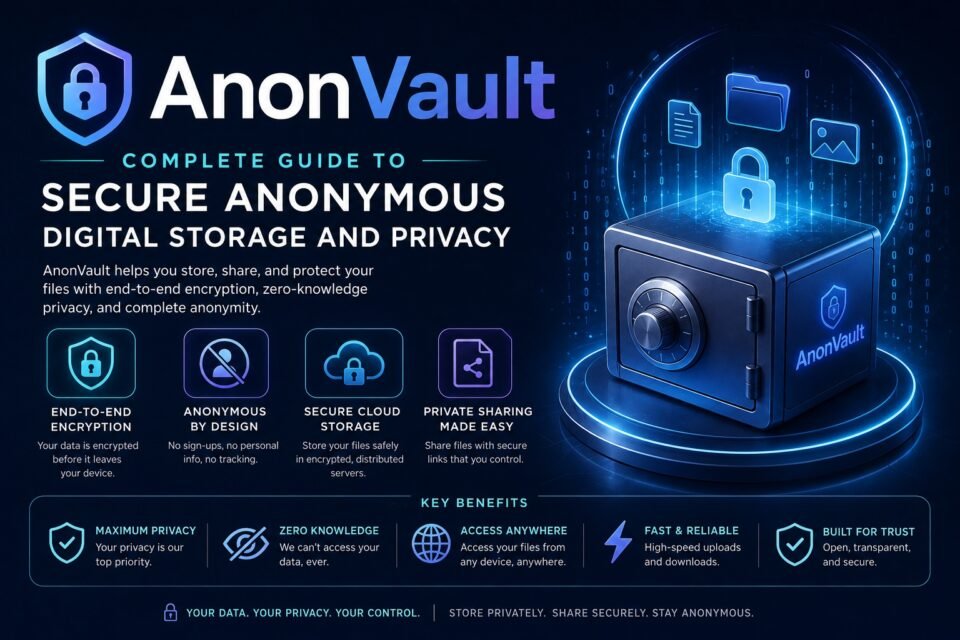

Many people search for AnonVault to understand what it is, how it works, and whether it offers genuine privacy benefits. While the exact meaning of the keyword can vary depending on context, it is commonly associated with anonymous digital storage, encrypted file management, and privacy-focused online services.
This comprehensive guide explores AnonVault, its features, benefits, security considerations, practical applications, and the future of anonymous cloud technology.
What Is AnonVault?
AnonVault refers to a concept centered around secure, anonymous, and privacy-focused digital storage. Rather than emphasizing user tracking or extensive personal information, systems associated with AnonVault prioritize confidentiality, encryption, and controlled access to stored data.
The idea behind AnonVault is simple:
- Protect sensitive information
- Reduce unnecessary data collection
- Improve digital privacy
- Secure files using modern encryption
- Give users greater control over their own information
Although implementations may differ, the keyword is generally connected with anonymous digital storage solutions designed for privacy-conscious users.
Why Is AnonVault Becoming Popular?
Growing concerns about cybersecurity and online surveillance have encouraged individuals and businesses to seek stronger privacy solutions.
Several factors contribute to the increasing interest in AnonVault:
- Rising cybercrime
- Frequent data breaches
- Identity theft risks
- Privacy regulations
- Remote work
- Secure file sharing needs
- Encrypted cloud storage demand
As users become more aware of how their information is collected, solutions emphasizing anonymity continue to gain attention.
Core Features of AnonVault
Although features may vary depending on implementation, AnonVault is commonly associated with several important capabilities.
End-to-End Encryption
Encryption ensures files remain protected while stored and during transmission.
Only authorized users can access encrypted information, reducing exposure to unauthorized access.
Anonymous Access
Privacy-focused systems often minimize the amount of personal information required during registration.
Some platforms may avoid collecting unnecessary personal details, allowing users greater privacy.
Secure File Storage
One major objective of AnonVault is protecting digital files from:
- Hackers
- Malware
- Unauthorized access
- Data leaks
- Accidental exposure
Cross-Device Availability
Modern storage solutions often support multiple devices, allowing users to access encrypted files from:
- Desktop computers
- Laptops
- Smartphones
- Tablets
Secure Sharing
Many privacy-focused storage services allow encrypted sharing through secure links or permission-based access.
This helps protect confidential information while enabling collaboration.
How Does AnonVault Work?
Although different platforms operate differently, a typical AnonVault workflow follows several steps.
Step 1: Upload Files
Users upload documents, photos, videos, or other digital files.
Step 2: Encryption
Before storage, files are encrypted using strong cryptographic algorithms.
Step 3: Secure Storage
Encrypted data is stored on protected servers or distributed storage systems.
Step 4: Authentication
Authorized users verify their identity before accessing stored content.
Authentication may include:
- Passwords
- Security keys
- Multi-factor authentication
- Biometric verification
Step 5: File Retrieval
Only users with proper authorization can decrypt and download files.
Benefits of Using AnonVault
There are numerous reasons why individuals and organizations may choose privacy-focused storage.
Enhanced Privacy
Personal information remains better protected from unnecessary exposure.
Better Data Security
Encryption significantly reduces risks associated with unauthorized access.
Protection Against Data Breaches
Even if storage servers are compromised, encrypted information remains difficult to read without proper keys.
Secure Remote Work
Remote employees frequently exchange confidential documents.
AnonVault concepts help improve secure collaboration across distributed teams.
Improved User Control
Users often retain greater control over permissions, sharing, and access rights.
Common Uses of AnonVault
Privacy-focused storage serves many practical purposes.
Personal Document Storage
Users may securely store:
- Identification documents
- Financial records
- Medical files
- Legal paperwork
- Password backups
Business File Protection
Organizations often manage confidential information including:
- Contracts
- Financial reports
- Client records
- Internal documents
- Intellectual property
Secure Collaboration
Teams can exchange sensitive information while reducing security risks.
Journalists and Researchers
Investigative professionals frequently require secure storage for confidential materials and sensitive sources.
Software Development
Developers may use encrypted storage for:
- Source code
- Security certificates
- Configuration files
- Backup archives
Security Technologies Behind AnonVault
Several technologies typically support anonymous storage systems.
Advanced Encryption Standards
Modern encryption algorithms protect stored information from unauthorized viewing.
Zero-Knowledge Architecture
Some privacy-focused systems use zero-knowledge encryption.
In this model, service providers cannot view user data because encryption keys remain under user control.
Multi-Factor Authentication
Extra authentication layers improve account protection.
Examples include:
- Authentication apps
- Hardware security keys
- SMS verification
- Email verification
Secure Data Transmission
Encrypted communication protocols help prevent interception while files travel across networks.
Is AnonVault Safe?
Security depends on several factors including implementation, encryption quality, account protection, and user practices.
A well-designed privacy platform should include:
- Strong encryption
- Secure authentication
- Regular security updates
- Backup protection
- Access monitoring
- Secure infrastructure
Users also play an important role by creating strong passwords and enabling multi-factor authentication.
Best Practices for Using AnonVault
Following good security habits improves protection.
Use Strong Passwords
Avoid simple passwords.
Instead, create long passwords using:
- Uppercase letters
- Lowercase letters
- Numbers
- Symbols
Enable Multi-Factor Authentication
An additional verification step significantly improves account security.
Keep Software Updated
Security updates help address newly discovered vulnerabilities.
Review File Permissions
Only share files with trusted individuals.
Remove unnecessary access whenever possible.
Maintain Offline Backups
Even secure cloud storage benefits from offline backup copies.
Potential Challenges
While privacy-focused storage offers many benefits, users should also understand possible limitations.
Learning Curve
Advanced privacy settings may require additional learning for new users.
Password Recovery
Some encrypted systems cannot recover forgotten passwords because encryption keys remain private.
Users should securely store recovery information.
Storage Limits
Free plans, where available, may offer limited storage capacity.
Performance
Encryption processes may slightly affect upload and download speeds depending on hardware and network quality.
AnonVault vs Traditional Cloud Storage
| Feature | AnonVault | Traditional Cloud Storage |
|---|---|---|
| Privacy Focus | High | Moderate |
| Encryption | Strong | Varies |
| Anonymous Usage | Often Supported | Usually Limited |
| User Data Collection | Minimal | Often Extensive |
| Secure Sharing | Yes | Yes |
| Access Controls | Advanced | Standard |
Who Should Consider AnonVault?
Various users may benefit from enhanced privacy.
These include:
- Business professionals
- Freelancers
- Journalists
- Researchers
- Students
- Healthcare workers
- Lawyers
- Financial consultants
- Privacy-conscious individuals
Tips for Choosing an AnonVault Solution
Before selecting any privacy-focused storage platform, evaluate:
- Encryption methods
- Privacy policy
- Security certifications
- Authentication options
- Storage capacity
- Pricing
- Customer support
- Backup features
- Sharing capabilities
- Cross-platform compatibility
Future of AnonVault
Digital privacy continues evolving rapidly.
Future developments may include:
- Artificial intelligence for threat detection
- Quantum-resistant encryption
- Decentralized storage networks
- Faster encrypted synchronization
- Improved biometric authentication
- Enhanced privacy regulations
- Smarter backup automation
As cyber threats become increasingly sophisticated, privacy-first technologies are expected to play a larger role in protecting personal and organizational information.
Frequently Asked Questions
What is AnonVault?
AnonVault generally refers to a privacy-focused approach to secure digital storage that emphasizes encryption, confidentiality, and user control over data.
Is AnonVault free?
Availability and pricing depend on the specific implementation or service associated with the AnonVault name.
Is AnonVault secure?
Security depends on the platform’s encryption, infrastructure, and user practices such as using strong passwords and enabling multi-factor authentication.
Can businesses use AnonVault?
Yes. Privacy-focused storage solutions can help businesses protect confidential documents, client information, and intellectual property.
Does AnonVault support file sharing?
Many secure storage systems provide encrypted sharing features with permission controls for safer collaboration.
Conclusion
AnonVault represents the growing demand for privacy-first digital storage in an era where data security is more important than ever. By focusing on encryption, confidential file management, and stronger user control, it offers an approach designed to reduce unnecessary exposure of sensitive information.
Whether you’re an individual protecting personal records or an organization safeguarding business data, understanding the principles behind AnonVault can help you make more informed decisions about digital privacy. As technology continues to evolve, secure and anonymous storage solutions are likely to become an increasingly valuable part of everyday digital life.