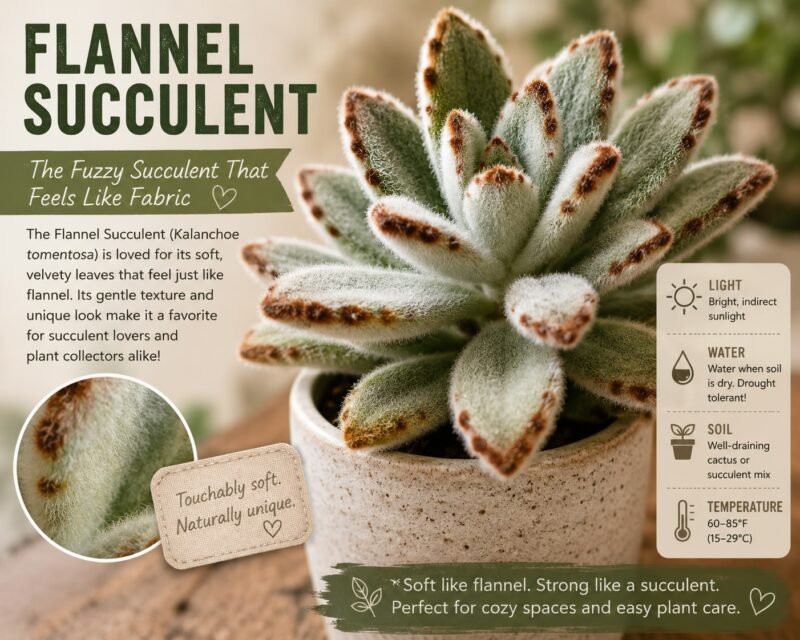

If you have ever run your fingers across a plant and done a double-take because it felt like soft fabric, you have likely encountered a flannel succulent. These remarkable plants are among the most tactilely unique members of the succulent world, featuring leaves covered in fine hairs that give them a texture reminiscent of flannel cloth.
The term flannel succulent is not a single species but rather a descriptive nickname for several different succulent varieties that share this distinctive fuzzy characteristic. From the iconic Kalanchoe beharensis to certain Sempervivum cultivars like the ‘Koko Flannel,’ these plants have captured the attention of collectors who appreciate both their visual appeal and their unusual feel.
This article explores everything you need to know about the flannel succulent, including its varieties, care requirements, and why these fuzzy plants have become so popular among succulent enthusiasts.
What Is a flannel succulent?
A flannel succulent is any succulent plant whose leaves are covered with fine, soft hairs or trichomes that create a velvety or fuzzy texture. This fuzz serves several purposes in the plant’s natural habitat, including protecting the leaves from intense sunlight, reducing moisture loss, and deterring pests.
The term “flannel” in flannel succulent comes from the fabric-like feel of the leaves. When you touch a well-grown specimen, it feels remarkably like soft flannel cloth—a sensation that surprises many first-time plant owners. This texture is caused by dense hairs that can range from barely visible to long and silky, depending on the variety.
Perhaps the best-known flannel succulent is Kalanchoe beharensis, a species native to Madagascar. One forum user described encountering this plant and noted that it has “leaves that are so big and flannel like looking” . This observation captures exactly why these plants earn the flannel nickname—the leaves genuinely resemble and feel like fabric.
Popular Varieties of flannel succulent
Several different plants fall under the flannel succulent umbrella. Here are the most notable varieties that succulent collectors seek out.
Kalanchoe beharensis
This is arguably the most famous flannel succulent. Kalanchoe beharensis, sometimes called the “felt plant” or “elephant’s ear kalanchoe,” features large, triangular leaves covered in dense brownish hairs. The leaves can grow quite large, giving the plant an almost architectural presence.
There are “many forms and cultivars of K. beharensis,” according to plant experts, so you can find a range of appearances even within this single species . Some forms have lighter hairs, some darker, and some feature different leaf shapes.
Sempervivum ‘Koko Flannel’
Another plant sometimes called a flannel succulent is Sempervivum ‘Koko Flannel.’ This hardy succulent, a type of hens-and-chicks, was discussed in a Houzz forum where members attempted to identify a mystery plant . The ‘Koko Flannel’ variety is described as having red-tipped and tufted leaves, adding color contrast to its fuzzy texture .
Sempervivums are notably hardy succulents that can survive outdoors in many climates, unlike their more tender Kalanchoe cousins. The ‘Koko Flannel’ variety combines the toughness of sempervivums with the attractive fuzzy texture that defines the flannel succulent category.
Other Fuzzy Succulents
Beyond these specific named varieties, many other succulents develop fuzzy leaves that could be described as flannel succulent. These include certain Echeveria species with powdery or fuzzy coatings, some Cotyledon varieties, and various other Kalanchoe species. The fuzzy trait appears across multiple succulent families, suggesting it is a beneficial adaptation that evolved independently in different lineages.
Why Do flannel succulent Leaves Feel Like Fabric?
The secret behind the flannel succulent’s soft texture lies in tiny structures called trichomes. These are hair-like outgrowths on the plant’s epidermis that serve multiple purposes. When numerous trichomes grow densely packed on a leaf surface, they create the soft, fabric-like feel that gives the flannel succulent its name.
Trichomes on the flannel succulent perform several important functions:
Protection from Sun: The hairs reflect some sunlight and create a barrier between the intense rays and the leaf surface, helping prevent sunburn.
Moisture Retention: In their native arid environments, the hairs trap a thin layer of humid air close to the leaf surface, reducing water loss through transpiration.
Pest Deterrence: The fuzzy surface can discourage insects from landing or feeding on the plant.
Understanding that this fuzz is functional, not just decorative, helps growers appreciate why the flannel succulent might need slightly different care than smooth-leaved succulents.
How to Care for Your flannel succulent
Caring for a flannel succulent is similar to caring for other succulents, but there are some specific considerations due to the hairy leaves.
Light Requirements
Like most succulents, the flannel succulent prefers bright light. However, the fuzzy leaves mean you need to be careful about water on the foliage—more on that below. Place your flannel succulent in a spot with bright, indirect light or several hours of direct morning sun. Be cautious with intense afternoon sun, especially if your plant has not been gradually acclimated.
Some forum members have noted that succulents “color with heat and cold” and that many Sempervivum varieties show seasonal color changes, with tips or edges becoming more vibrant at certain times of year . This means your flannel succulent may look different across seasons, with more intense fuzz or color at various times.
Watering
The flannel succulent should follow the standard succulent watering rule: allow the soil to dry completely between waterings. However, the fuzzy leaves present a special challenge—water sitting on the hairs can lead to rot or unsightly marks.
When watering your flannel succulent, aim for the soil rather than the leaves. Use a watering can with a narrow spout or a squeeze bottle to direct water to the base of the plant. If water does get on the leaves, gently dab it off with a soft cloth or use a small fan to dry the plant.
Soil and Potting
Use a well-draining succulent or cactus mix for your flannel succulent. You can improve drainage by adding perlite or coarse sand to the mix. A pot with drainage holes is essential because, like all succulents, the flannel succulent dislikes sitting in wet soil.
Temperature Considerations
Different flannel succulent varieties have different temperature tolerances. Kalanchoe beharensis, for example, is tender and must be protected from frost. On the other hand, Sempervivum ‘Koko Flannel’ is extremely cold-hardy and can survive freezing temperatures . This is one reason it is essential to know which specific flannel succulent you are growing so you can provide appropriate winter protection.
Common Issues with flannel succulent
While the flannel succulent is generally an easy-care plant, there are a few problems to watch for.
Overwatering
Overwatering is the most common cause of death for succulents. For the flannel succulent, overwatering is particularly problematic because the fuzzy leaves trap moisture close to the plant, increasing the risk of rot. Signs of overwatering include yellowing, translucent, or mushy leaves.
Fungal Issues
The dense hairs on the flannel succulent can trap moisture, making the plant more susceptible to fungal infections. Good airflow around the plant helps prevent this. Consider placing a small fan near your indoor flannel succulent to improve air circulation.
Pests
Mealybugs and aphids can sometimes target the flannel succulent. Because the hairs provide hiding places, these pests can be harder to spot and remove. Regularly inspect your plant, paying special attention to the undersides of leaves and the growing points.
Propagating flannel succulent
One of the joys of growing a flannel succulent is how easily it propagates. According to plant enthusiasts, “from those leaves you can obtain new plants,” referring to Kalanchoe beharensis and similar species .
To propagate your flannel succulent:
Gently twist off a healthy leaf.
Allow the leaf to callus over for a few days.
Place the leaf on top of well-draining soil.
Mist lightly occasionally until roots and tiny plantlets form.
Leaf propagation is a satisfying way to expand your collection of flannel succulent plants and share them with friends.
Why the flannel succulent Is a Collector’s Favorite
The flannel succulent holds a special place in the hearts of succulent enthusiasts for several reasons.
Tactile Appeal
In a world where many succulents have smooth, waxy, or spiky leaves, the flannel succulent offers something different—a plant you can touch. There is genuine delight in gently stroking the fuzzy leaves, an experience that many plant lovers seek out.
Unique Appearance
The flannel succulent stands out in any collection. Its soft, textured leaves create a visual contrast with other succulents, adding depth and interest to a display.
Conversation Starter
Bring a flannel succulent to the office or a plant swap, and watch people’s reactions. The fabric-like texture surprises and delights, making it one of the best succulents for sparking conversations about plants.
Conclusion: Bringing the flannel succulent Into Your Home
The flannel succulent offers a unique blend of visual appeal, tactile pleasure, and easy care that makes it an excellent choice for both beginner and experienced plant enthusiasts. Whether you choose the large-leaved Kalanchoe beharensis, the hardy Sempervivum ‘Koko Flannel,’ or another fuzzy variety, you will enjoy watching this special plant grow.
Remember that while the flannel succulent is relatively low-maintenance, paying attention to watering technique and providing bright light will help your plant thrive. Keep water off the fuzzy leaves, ensure good drainage, and give your plant time to adjust to new light conditions.
In return, your flannel succulent will reward you with its unusual, soft leaves that truly feel like fabric. It is a plant that invites touch and brings a unique sensory experience to your indoor garden. Whether you are drawn to its textured leaves, its interesting growth habit, or its ease of care, the flannel succulent is a worthy addition to any plant collection