
 By Callum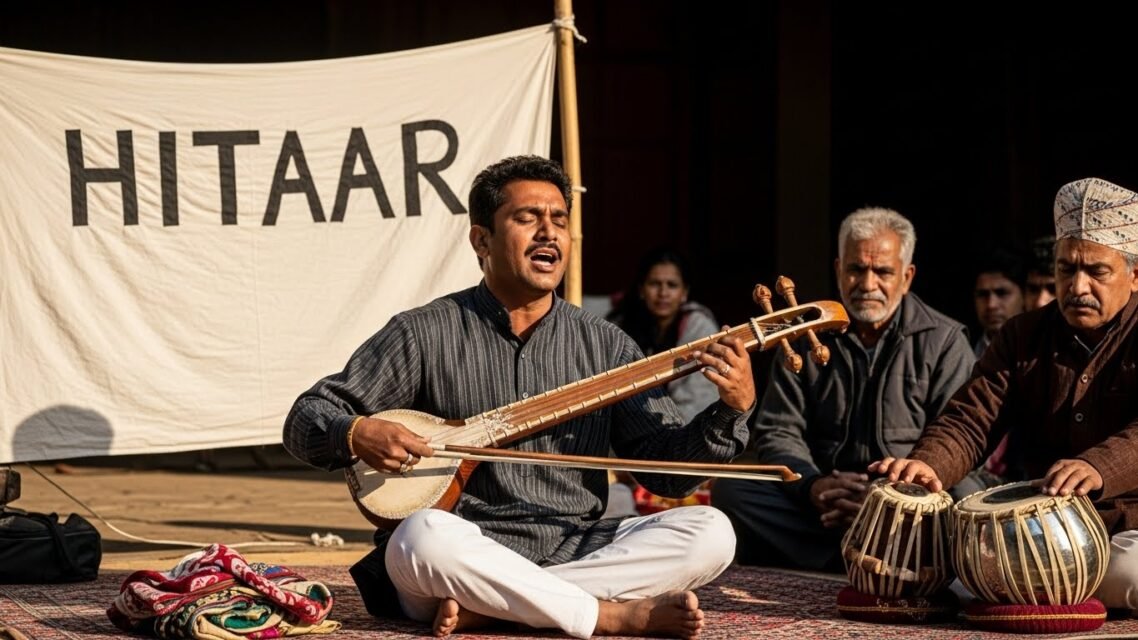
Hitaar is a traditional stringed instrument and storytelling method originating from South Asia, designed to weave narratives through rhythmic melodies and lyrical performance. This art form serves as both a musical discipline and a vessel for preserving regional folklore, connecting past generations with contemporary audiences. The practice involves specific fingerpicking techniques on a long-necked wooden instrument, accompanied by vocals that recount tales of love, loss, and heroism.
Musicians, often called “Hitaaris,” utilize this instrument to create a vibrant tapestry of stories woven through sound. The Hitaar functions as a historical archive, maintaining the cultural heritage of rural communities. Its usage has expanded from village gatherings to digital platforms, where younger generations are revitalizing the tradition through modern adaptations.
Understanding Hitaar
Hitaar functions as a cultural bridge that connects listeners to the history of their ancestors. It is not merely about producing sound; it is a system of communication used to convey experiences that transcend time and place. The instrument acts as the primary tool for a bard or storyteller, providing the melodic backbone for epic narratives.
What Hitaar Means: Addressing Common Confusion
The term “Hitaar” frequently causes confusion due to its phonetic similarity to “guitar” or its dual usage as an educational concept. Hitaar is a distinct stringed instrument with specific tuning requirements and a unique construction, separate from the standard acoustic guitar. It is also not a typo for “Sitar,” though they share organological similarities.
There is also a distinction between the instrument and the philosophy. While the physical object is a chordophone, “Hitaar” in certain contexts refers to the holistic approach of teaching music through oral transmission and emotional connection rather than strict notation.
Hitaar as a Musical Instrument
The physical Hitaar features a hollow wooden body, a long neck, and a resonant chamber similar to a sitar or rabab. Musicians use a combination of main playing strings for melody and sympathetic strings that vibrate underneath to create a buzzing, immersive drone. This design allows for acoustic resonance shaping, giving the instrument its signature ethereal quality.
The sound is characterized by its ability to mimic the human voice. This is achieved through meend (gliding between notes) and microtonal string bending. Unlike a guitar with fixed frets, the Hitaar often has movable frets or a fretless fingerboard, enabling the musician to access the microtones found in Eastern scales.
Hitaar as an Educational Philosophy
Hitaar represents a method of learning that prioritizes ear training and oral tradition over written notation. Students learn to internalize rhythm and melody before they ever touch the instrument. The philosophy emphasizes that music is a language that must be spoken and heard to be understood.
Mentors guide students to find their own “voice” on the instrument. This approach encourages improvisational modal playing rather than rote memorization of songs. It fosters a deep understanding of harmonic distortion, sweetening, and dynamic range compression naturally, without the need for electronic aids in the early stages.
Cultural and Linguistic Significance
Linguistically, the word Hitaar is deeply rooted in local dialects, often translating to “strings that speak” or “singing wood.” In South Asia, it is the voice of the rural community, preserving idioms and metaphors that might otherwise vanish from daily use.
Culturally, the instrument symbolizes the resilience of folklore. It is the centerpiece of communal life, present at weddings, harvest festivals, and social gatherings. The songs sung to the Hitaar often contain the moral codes, history, and social values of the community, making it a vital educational tool for children in these regions.
You Might Also Like: Sofoximmo
The Origins and History of Hitaar
Hitaar originated in the vibrant cultures of South Asia, particularly within rural communities where oral storytelling was the primary form of entertainment and education. Wandering bards traveled between villages, using the portable instrument to spread news, recount historical battles, and share religious parables.
The instrument evolved alongside the harmonium and traditional flutes. Over centuries, it absorbed influences from Persian instruments brought by travelers and traders. The structural changes—such as the addition of a gourd resonator—improved its projection, allowing it to be heard by larger crowds before the advent of amplification.
The Art of Hitaar: Techniques, Styles, and Inspirations
The technique of playing Hitaar relies heavily on intricate fingerpicking and improvisation. Musicians must master the balance between melody and rhythm, often playing both simultaneously.
How Hitaar is Performed
Performances are intimate and interactive. The musician sits cross-legged on a raised platform or rug, often accompanied by a percussionist playing the tabla or dholak. The session begins with a slow, rhythmic introduction called the alaap, which sets the mood without a fixed beat.
As the performance progresses, the tempo increases. The artist engages in call-and-response segments with the audience or fellow musicians. Dancers may join the performance, interpreting the lyrics through expressive hand gestures and footwork. The atmosphere becomes immersive, with the audience often clapping or vocalizing their appreciation at key moments of the narrative.
The Process of Crafting a Hitaar
Luthiers carve the body of a Hitaar from seasoned Tun or Teak wood, chosen for its acoustic properties. The soundboard is thin and delicate, requiring precision to prevent cracking under tension. The bridge is typically shaped from bone or deer horn, filed to a specific curve to facilitate the “jawari” (buzzing sound) characteristic of the genre.
Crafting a Hitaar takes weeks or even months. The neck is hollowed out to allow sound to travel the length of the instrument. Finally, the instrument is varnished and strung with steel and brass strings. Luthiers often decorate the body with intricate inlay work, making each Hitaar a visual work of art as well as a musical tool.
The Role of Hitaar
The Hitaar serves multiple functions within society, shifting between entertainment, education, and ritual.
In Storytelling
Hitaar is the primary vehicle for the vibrant tapestry of stories that define regional identity. The music dictates the emotional pacing of the tale; rapid strumming accompanies battle scenes, while slow, melancholic bends underscore moments of tragedy.
The significance of storytelling lies in the instrument’s ability to retain the listener’s attention for hours. The bard uses the Hitaar to create suspense and relief, effectively scoring the story in real-time. This auditory journey allows the audience to visualize the narrative, making the oral history memorable and impactful.
In Traditional Arab Culture
While primarily South Asian, the influence of Hitaar extends into traditional Arab culture through historical trade routes and shared musical lineage with the Oud. In these contexts, stringed instruments are central to the Majlis (gathering), where poetry and music intertwine.
The Hitaar’s role here parallels that of the Bedouin rababa. It accompanies the recitation of epic poetry, serving as a background texture that enhances the spoken word. This cross-cultural connection highlights the universal human desire to pair stories with string vibrations.
Hitaar’s Influence on Culture and Society
Hitaar acts as a social glue, binding diverse cultures and communities together through shared artistic experiences. It provides a platform for social commentary, where singers can address contemporary issues through the guise of traditional lyrics.
The instrument has influenced the structure of regional arts. Many folk dances have evolved specifically to match the rhythmic patterns of Hitaar music. Furthermore, the costumes worn by performers—often vibrant and embroidered—have become symbols of cultural pride, worn during festivals even by non-musicians.
Modern Adaptations and Innovations
The instrument is undergoing a transformation to suit modern sensibilities and recording technologies.
Modern Adaptations of Hitaar
Contemporary artists have developed electric guitar models equipped with magnetic pickups. This allows for direct connection to amplifiers and the use of effects pedals. Musicians now experiment with loop pedal layering to create complex soundscapes solo.
These electric versions maintain the traditional fretboard geometry but allow for sustained feedback manipulation and psychedelic fuzz saturation. This fusion allows the Hitaar to compete sonically with drums and electric guitars in rock and fusion bands, bringing the sound to main stages at global music festivals.
You Might Also Like: NTDTVJP
Why Hitaar Resonates Today
In a world dominated by digital production, the organic, raw sound of the Hitaar offers a grounding experience. It connects listeners to a sense of heritage that feels authentic and untouched.
Why People Are Drawn to Hitaar
People are drawn to Hitaar because it expresses emotions that words alone cannot. The vocal-like quality of the instrument resonates with feelings of joy, sorrow, love, and loss. For the diaspora living away from their homeland, the sound of the Hitaar is a powerful link to their roots.
Furthermore, the complexity of the instrument attracts musicians looking for a challenge. The unique tuning methods and rhythmic structures offer a fresh alternative to standard Western music theory, allowing for fretboard harmonic exploration that expands a musician’s creative palette.
Immersing in Hitaar: Where to Experience It Today
Folk festivals in South Asia are the most authentic places to experience Hitaar. Events such as the Lok Virsa Festival or regional melas in Rajasthan and Punjab feature master players.
Globally, “World Music” concerts and cultural exchange programs frequently host Hitaar ensembles. Museums dedicated to musical instruments, such as the Musical Instrument Museum in Phoenix, often display historical harps and offer audio samples.
Modern Day Revival of Hitaar
Social media platforms have sparked a modern-day revival of Hitaar. YouTube channels and Instagram accounts dedicated to traditional instruments allow masters to teach students worldwide. Viral videos of Hitaar players covering popular songs have introduced the instrument to millions who had never heard it before.
This digital visibility has led to a surge in demand. Luthiers are seeing increased orders from international buyers. Workshops and online courses are now available, democratizing access to this once-guarded oral tradition.
The Significance of Hitaar in Today’s Society
Hitaar serves as a resistance against cultural homogenization. By maintaining distinct musical identities, communities preserve their uniqueness in a globalized world. The stories told through Hitaar remind contemporary audiences of the values of heroism, wisdom, and community support.
It also serves a therapeutic role. The meditative quality of the drone strings is used in music therapy sessions to promote relaxation and mental clarity. The vibration of the acoustic instrument is believed by practitioners to have healing properties.
Getting Started with Hitaar
To begin learning, one must first acquire a quality instrument. Aspiring players can buy Hitaar online, though consulting with an expert to ensure proper setup is recommended. Key accessories include a sturdy case, extra strings, and distinct plectrums (mizrab) used for striking.
Beginners should focus on holding the instrument correctly to avoid strain. The first lessons typically involve tuning the main strings and sympathetic strings. Listening to recordings of master vocalists and instrumentalists is crucial for internalizing the melodic framework (Ragas) used in Hitaar music.
Conclusion and Reflection
The Hitaar stands as a testament to the power of music to carry history. It is a vibrant mix of craftsmanship, oral literature, and melodic complexity that has survived centuries of change.
The Enduring Allure of Hitaar
The enduring allure lies in its capacity for evolution. While deeply rooted in the past, the Hitaar adapts to new genres and technologies without losing its soul. It remains a challenging yet rewarding instrument that offers endless possibilities for expression.
Why Hitaar is a Timeless Tradition Worth Preserving
Preserving the Hitaar is essential for safeguarding the stories and languages it carries. If the music fades, the narratives interwoven with the melodies risk disappearing as well. By supporting artists, attending performances, and learning the history, society ensures that this diverse cultural heritage continues to inspire future generations.