
 By Callum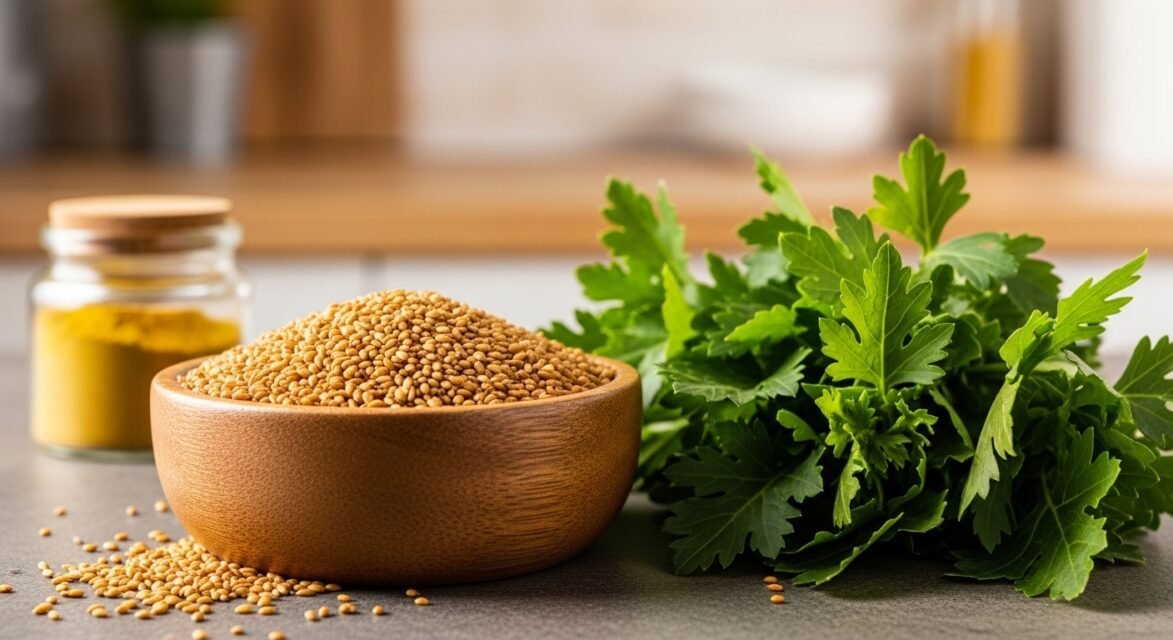
Foenegriek (Trigonella foenum-graecum) is a versatile plant belonging to the legume family that functions as a spice, herb, and medicinal tool. This nutritional powerhouse offers 3 primary benefits: blood sugar regulation, digestive health support, and improved hormonal balance. People primarily use foenegriek seeds and foenegriek leaves in global cuisines and traditional wellness routines. These components work through active compounds like saponins and fiber to promote metabolic and physical resilience.
Understanding Foenegriek
Foenegriek is a versatile plant belonging to the legume family and is valued primarily for its seeds and leaves. The plant, known as fenugreek in English, is characterized by its small golden-brown seeds and green trifoliate leaves. It carries a flavor profile complex in nature, featuring a warm nutty aroma and a slightly bitter taste that transforms into a maple syrup aroma when cooked.
Foenegriek as a botanical concept
The botanical concept foenegriek refers to an annual plant that thrives in semi-arid regions. It is a member of the Fabaceae family. There are 2 main parts of the plant used for human consumption:
Foenegriek seeds: Hard, yellowish-brown seeds used as a spice or supplement.
Foenegriek leaves: Known as methi, used fresh or dried (kasuri methi) as a leafy vegetable or herb.
You Might Also Like: Sourthrout
History and Origin of Foenegriek
Foenegriek originated in the Mediterranean region and parts of South Asia. Ancient civilizations recognized its value early on and incorporated it into daily practices as early as 4000 BC. Archaeological records suggest that foenegriek was cultivated in parts of the Middle East, North Africa, and Europe.
The historical roots of It
The historical roots of it is tied to ancient Egypt, where it was used for embalming and as a food source. In ancient Greece and Rome, farmers used it as cattle fodder, leading to its name “Greek hay.” These ancient civilizations passed down traditional knowledge through generations, ensuring its survival into the modern era.
Foenegriek in Traditional Culinary Practices
Traditional culinary practices use it as an aromatic culinary enhancer in slow-cooked dishes. It is a staple in global cuisines, especially in South Asia and the Middle East. When roasting foenegriek seeds, the heat reduces the inherent bitterness and releases essential oils that provide depth to sauces and vegetable stir-fries.
Cultural significance of It across regions
The cultural significance of it across regions is seen in its role as a symbol of nourishment and abundance. In North Africa and the Middle East, it is often featured in cultural rituals and celebratory meals. It represents resilience because the plant can grow in poor soil, supporting sustainable agriculture in developing regions.
Foenegriek and its role in everyday wellness traditions
Foenegriek plays a role in everyday wellness traditions as a natural galactagogue (milk-booster) and digestive aid. Families integrate it into traditional preparation methods, such as soaking seeds overnight, to create a bitter yet beneficial tonic. On January 20, 2026, many wellness blogs, including 2umagazine.com, highlighted its continued relevance in modern plant-based diets.
Nutritional Benefits of Foenegriek
It is a nutritional powerhouse because it contains high levels of fiber, iron, and magnesium. One tablespoon (11.1 grams) of whole seeds provides:
Fiber: 3 grams.
Protein: 3 grams.
Iron: 20% of the Daily Value (DV).
Manganese: 7% of the DV.
Magnesium: 5% of the DV.
Uses of It in Traditional Medicine
Traditional medicine utilizes foenegriek to treat 4 specific conditions: high blood sugar, low libido, poor digestion, and inflammation. In Ayurveda, it is a primary ayurvedic digestive aid used to soothe the stomach. Practitioners use it’s seeds to create poultices for skin irritations, utilizing its powerful anti-inflammatory properties.
You Might Also Like: Pravi Celer
Modern perspectives on foenegriek
Modern perspectives on it focus on its role as a testosterone boosting spice and blood sugar regulator. Scientific studies suggest that it can increase testosterone levels in men and improve insulin sensitivity. As sustainability foenegriek plays a larger role in global conversations, it is viewed as an essential crop for sustainable farming practices due to its nitrogen-fixing abilities.
Potential Side Effects and Precautions
Foenegriek is generally safe, but it may cause 3 common side effects: diarrhea, bloating, and a maple-like body odor. Use caution if you have a legume allergy.
Pregnancy: Avoid high doses, as it may stimulate uterine contractions.
Diabetes: Monitor blood sugar levels closely, as it can lower glucose significantly.
Medication interactions: Consult a doctor if taking anticoagulants or blood thinners.
It represents a bridge between ancient traditions and modern curiosity. By understanding its rich history, cultural significance, and nutritional benefits, you can effectively integrate this legume into your lifestyle for optimal health.